
Haeryong Cha, Public Relations Team, Human in Love (harold_c@humaninlove.org)
September 8 is International Literacy Day, and UNESCO’s theme this year is “Literacy for People, Planet and Prosperity.” Last March, in the Rweru sector of Bugesera District in Rwanda’s Eastern Province, a single day made that theme concrete.
On March 30, 2026, 281 adults from Rweru completed Human in Love’s adult literacy program. Eight months earlier, most of them could not write their own names.
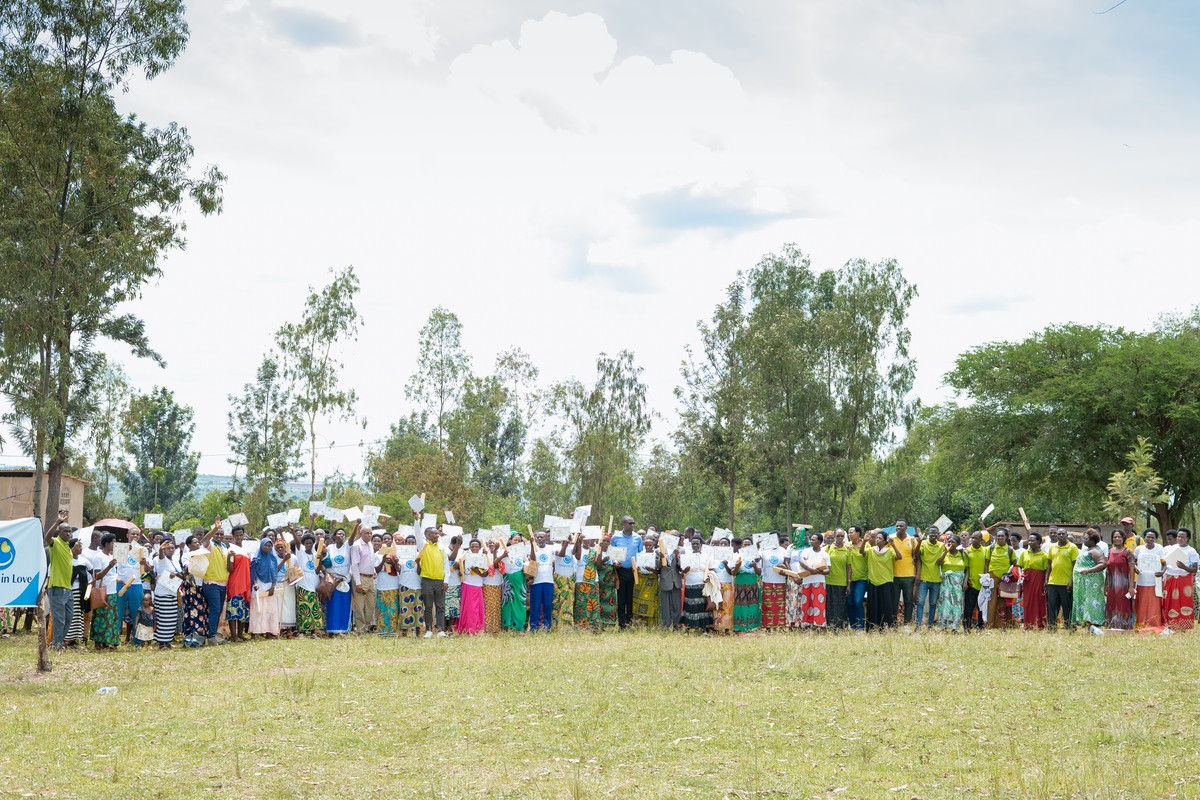
Where This Program Works
Bugesera is a district of returnees. Many of its residents fled to Tanzania, Uganda, Burundi or the Democratic Republic of the Congo during the 1994 Genocide against the Tutsi in Rwanda, lived as refugees for years, and came back to find no land and no house waiting for them. In the area Human in Love serves, 60.6 percent of residents fall into Ubudehe categories 1 and 2 — the two poorest bands in the Rwandan government’s six-level socio-economic classification, and the threshold for state welfare support.
Most of them work as daily agricultural laborers, earning less than a dollar a day. For many households, one meal a day is the realistic target. Having been left out of formal schooling, they reach adulthood without the basic knowledge and skills that ordinary life requires: unable to read or write words and figures, unable to secure adequate nutrition, living in poor sanitary conditions. The cycle closes on itself and holds.
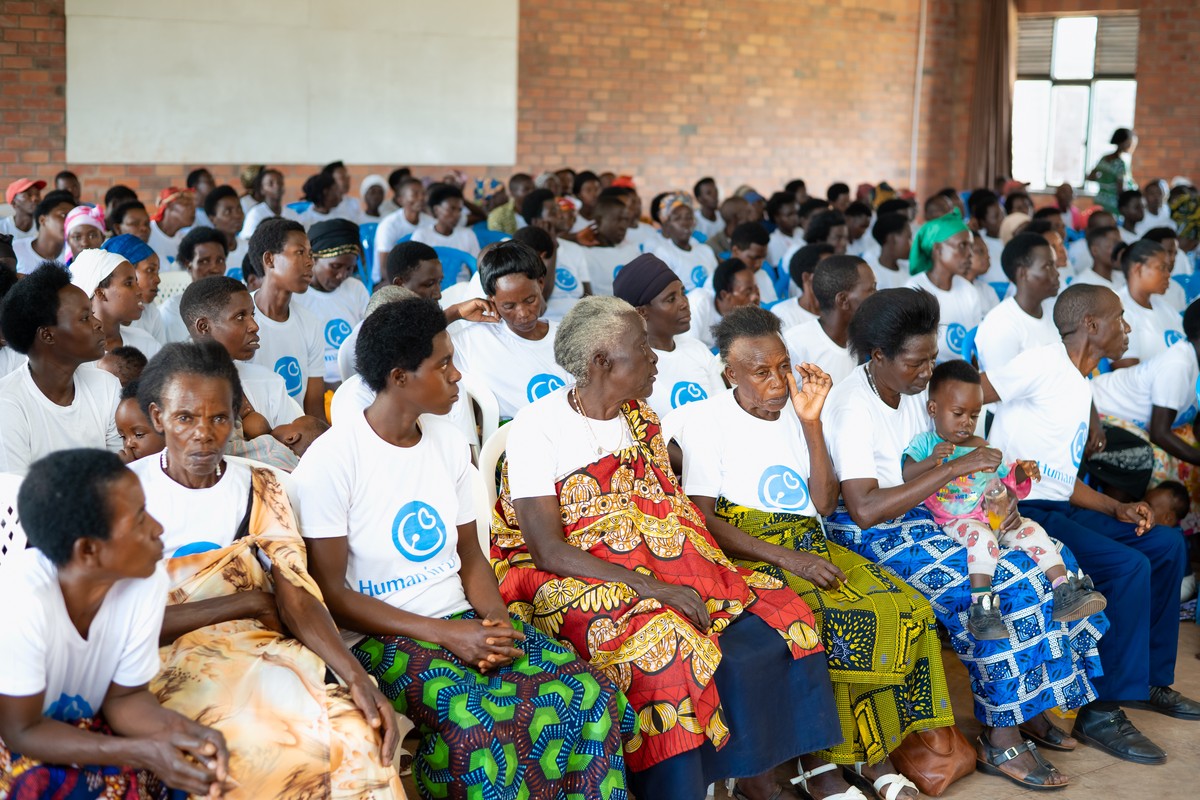
Eight Months, Fifteen Centers, Twice a Week
From August 2025 to March 2026, Human in Love ran literacy classes for 300 non-literate adults across 15 centers in Rweru. Sessions were held twice a week, two hours at a time. 281 people completed all eight months — a completion rate of 93.7 percent.
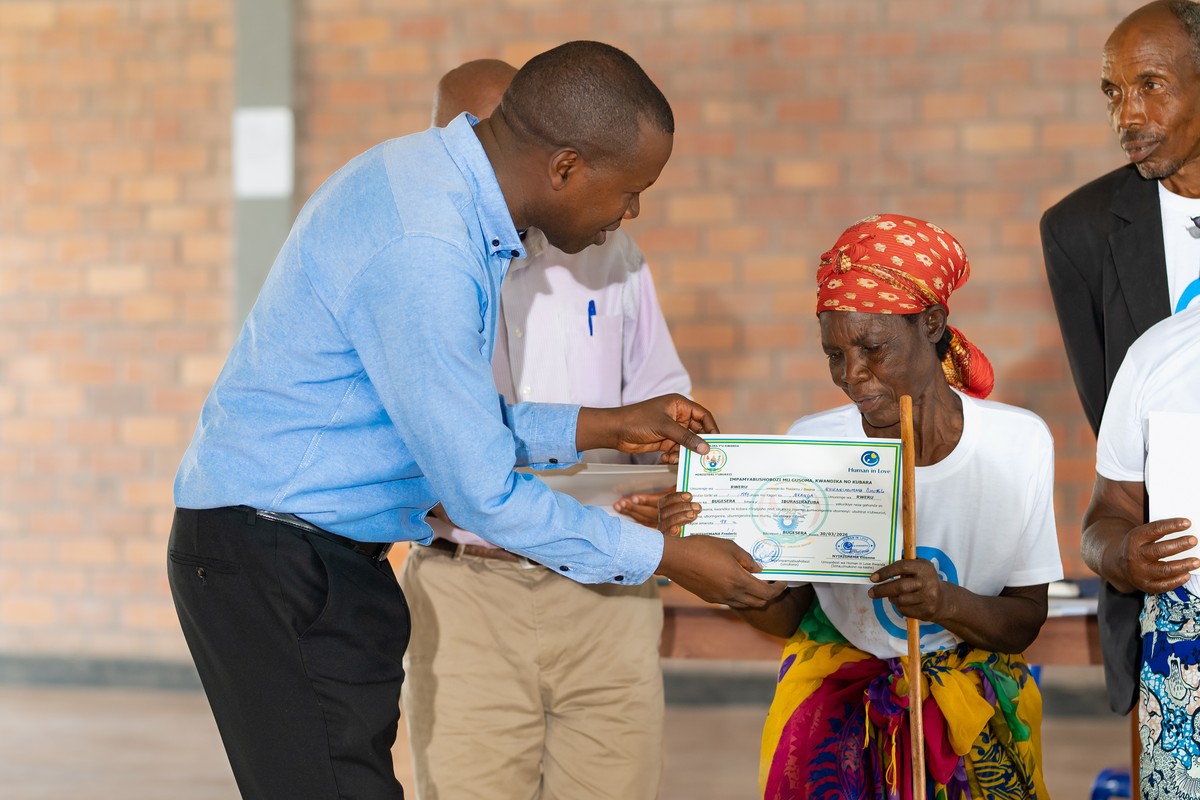
The graduation ceremony on March 30 drew 350 people: the graduates themselves, district education officials, the literacy teachers, and graduates’ families. Albert Niyigena, Education Officer for Bugesera District, and Frederic Mukeshimana, Sector Education Inspector for Rweru, were present. There, 281 official certificates were awarded — one at a time, each graduate walking forward as their name was read out.
Until the ceremony began, the participants had been dancing to music. But as the names started and each person stepped up alone, their faces turned noticeably solemn. Being called by name, 281 times over, was that serious a matter.
“Now I Can Help My Children with Their Homework”
Uwimana Solange, a graduate of the Mazane center, put it this way:
“Before I came to these classes, I could not even read or write my own name. Today I received my certificate, and I am proud of myself. Now I can help my children with their homework, and I can keep the simple accounts for my small shop.”
Ahishakiye Philomene, from the Nyiragiseke center, added:
“This program changed my life. I always felt I was falling behind, and now I have confidence. Learning at my age showed me that it is never too late to learn.”
The classes taught more than reading and writing. Basic numeracy and health and sanitation knowledge were built into the curriculum, for a clear reason: not being able to read words and figures raises specific walls in daily life. A person can work honestly and still be unable to confirm the wage they were promised. They cannot open a bank account. They cannot read the information they need to protect their family’s health.
The curriculum is certified by the Rwandan government, and it reaches further than literacy alone: alongside reading, writing and numeracy, it covers agriculture and livestock, health and sanitation, gender equality, human rights, and community development.
The certificate that closes the eight months carries no formal academic standing — it does not confer primary or secondary school equivalency. What it carries is practical standing. It is recognized by Rwanda’s Ministry of Education, its teaching materials and curriculum are government-certified, and it is signed by representatives of three parties: the Bugesera District authorities, the Rweru Sector authorities, and Human in Love.
What it attests is simply that its holder can read, write and count. In daily life that means keeping a ledger for a small business, checking a calculation, confirming the terms of an agreement, sitting with a child over schoolwork — and, further out, recognizing why that child’s schooling matters at all.
The teachers who walked those eight months alongside them watched the change as it happened. Ahobantegeye Frodouard, the lead literacy teacher, said:
“The time I spent teaching in this program was a great encouragement to me. I watched people who struggled even to write their own names grow into readers who took an active part in class. That change shows what adult education can do.”
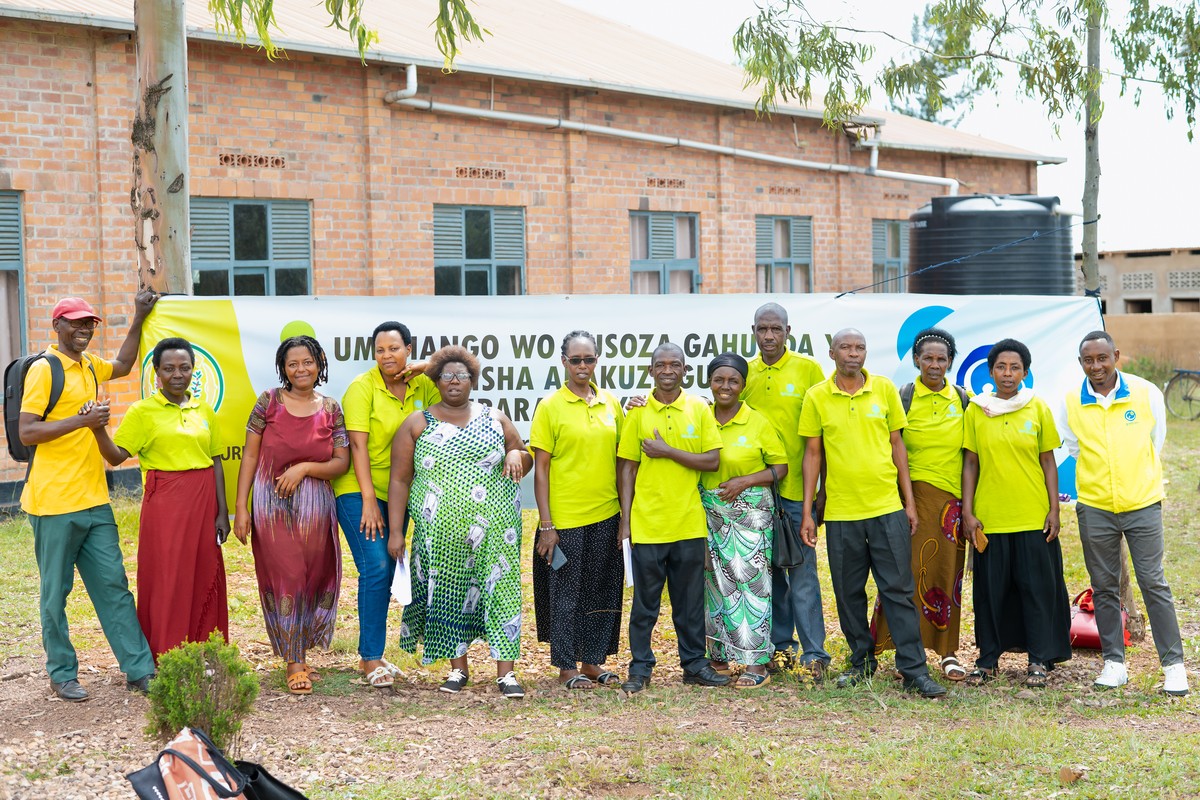
A Goat and a Hoe
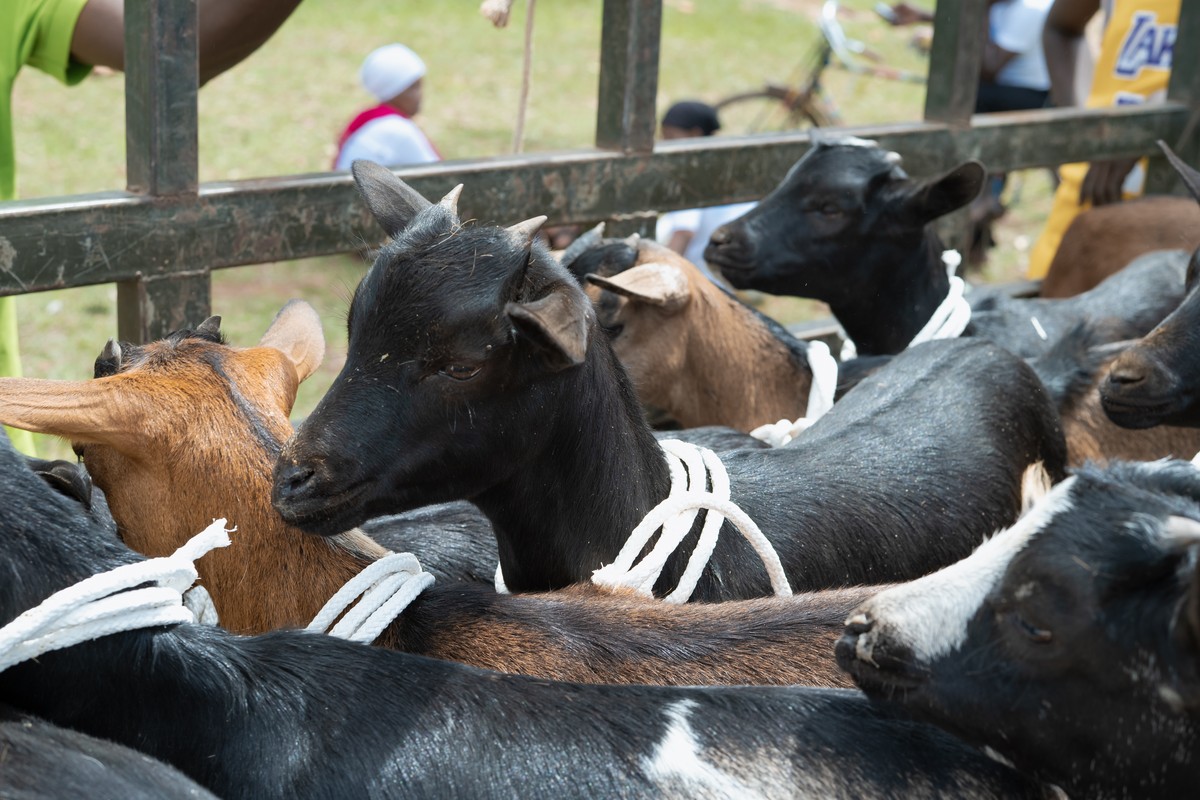
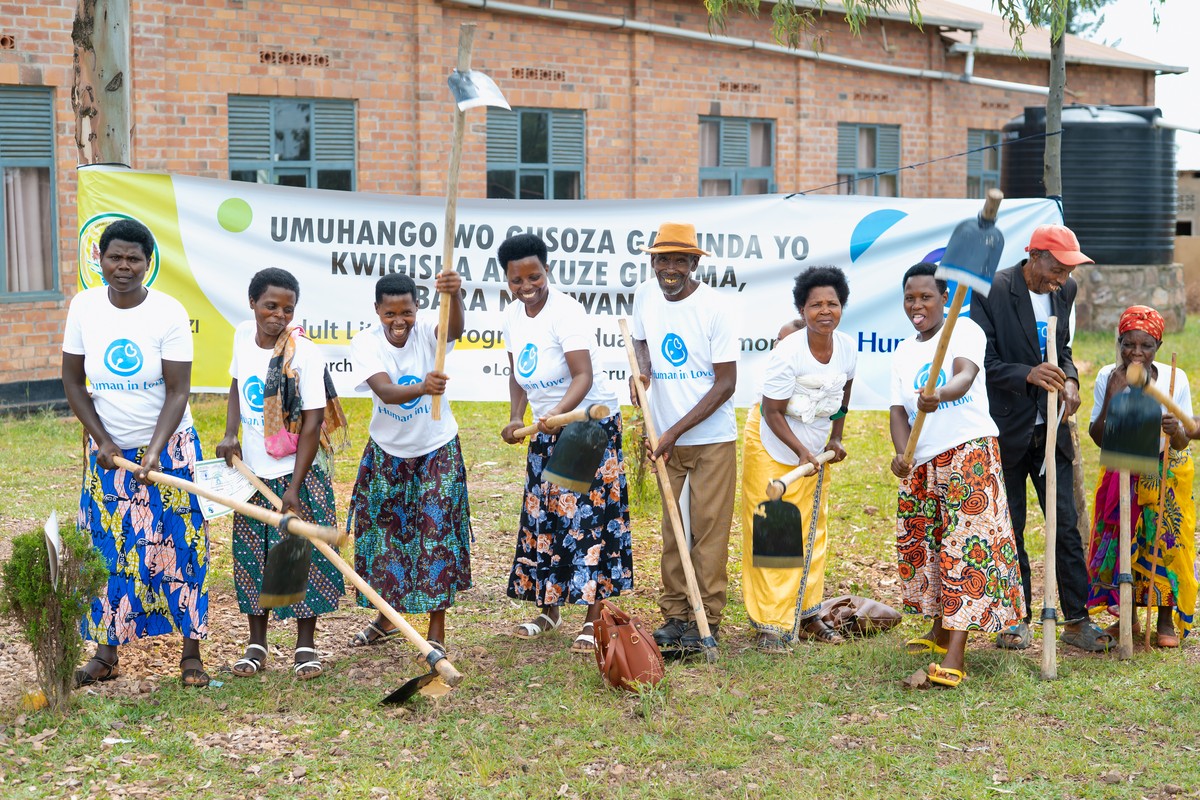
The ceremony came with prizes. The top graduate at each of the 15 centers received a goat; the 15 with the strongest attendance each received a hoe.
Not a plaque, and not a trophy. A goat is an asset that reproduces; a hoe is a tool used in the field the next morning. The prizes are designed so that the result of learning connects directly to a household’s livelihood, and earlier cohorts have been recognized the same way. The graduates holding those prizes wore the brightest expressions of the day.
When Adults Learn, Their Children’s Schooling Changes
The reason for concentrating on adult literacy in a district this poor is straightforward: the person who decides a child’s education is, in the end, the parent.
Rwanda’s Demographic and Health Survey (DHS 2019–20) found that participation in early learning among children aged 24 to 59 months ranged from 19.7 percent to 45.3 percent depending on the mother’s level of education. Educational opportunity in one generation carries into the next.
This is an approach aimed not at support that ends with a single generation, but at change that crosses into the one after it.
Etienne Nyirishema, Country Director of Human in Love Rwanda, told the graduates at the ceremony:
“Education is not only for children. Today you have shown that adults can also learn, grow, and inspire others. I am proud of your determination. We will continue to support the work of changing lives through education.”
Albert Niyigena, the district education officer, also spoke:
“Adult education strengthens families and builds stronger communities. What you have achieved today is an excellent example to others. We thank Human in Love for complementing the government’s efforts to advance literacy.”
2,146 Graduates Since 2017
Human in Love’s adult literacy program in Rwanda began in 2017. Across two areas — Rweru and Nyamata — 2,146 people have completed it to date. These 281 graduates are the most recent page in that record.
The program is run entirely on Human in Love’s own resources, sustained by the organization’s individual regular donors. It leaves behind no building and no equipment. What it leaves behind is 281 people who can write their own names, and the children growing up watching them do it.